Optomat
Participatory Machine Sculpture
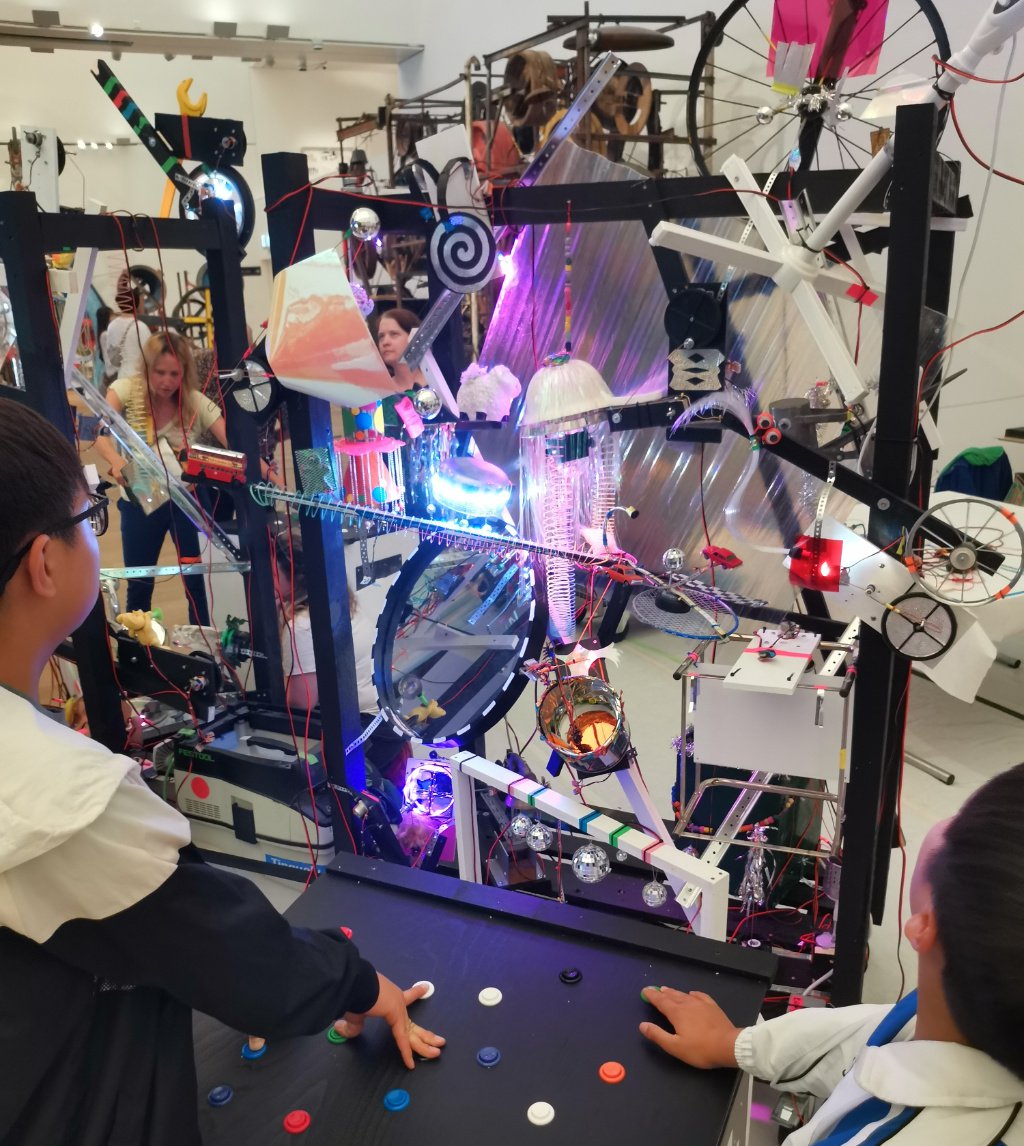
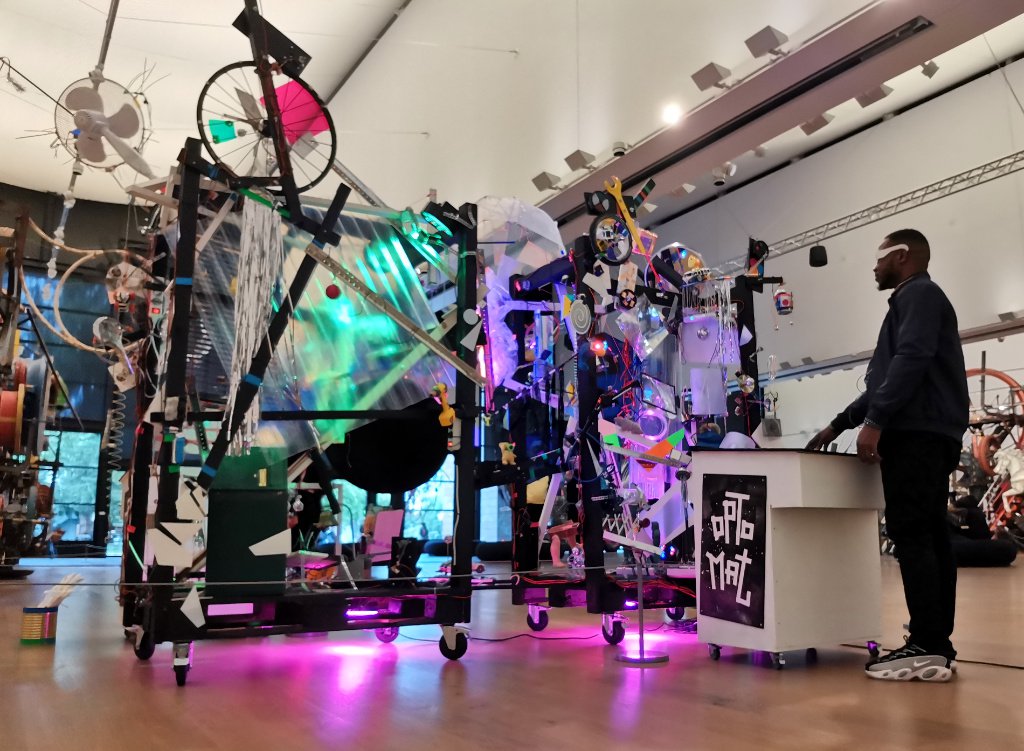
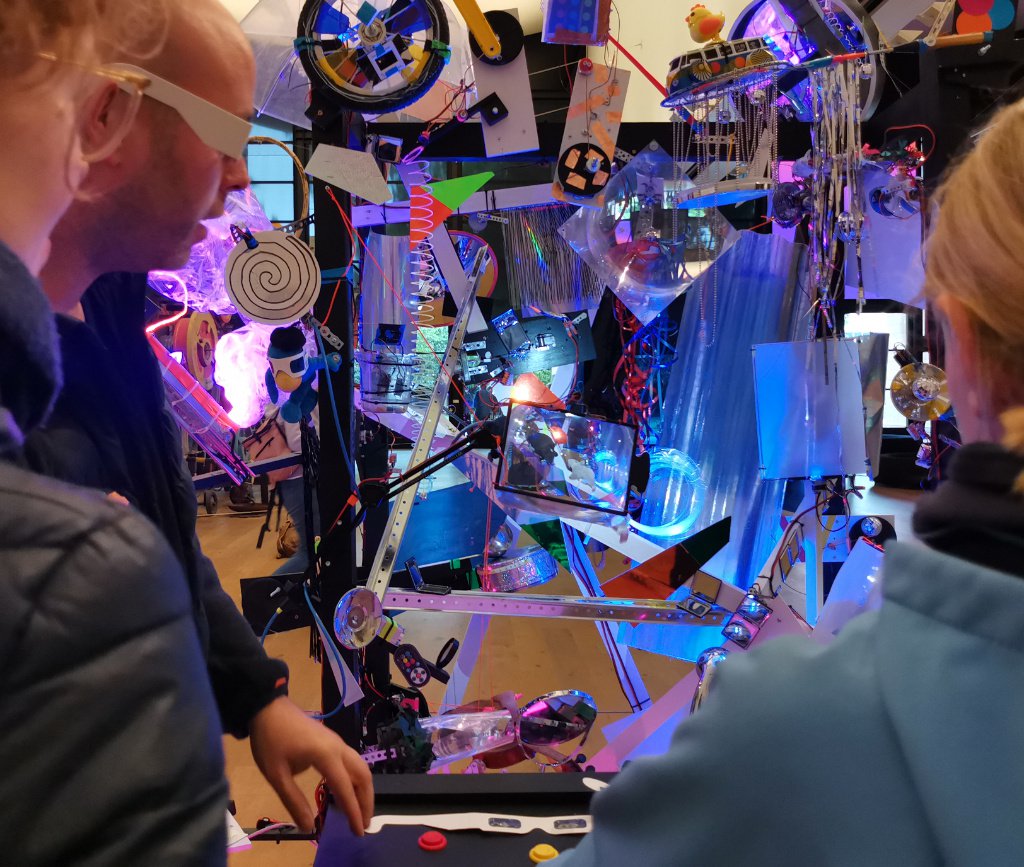
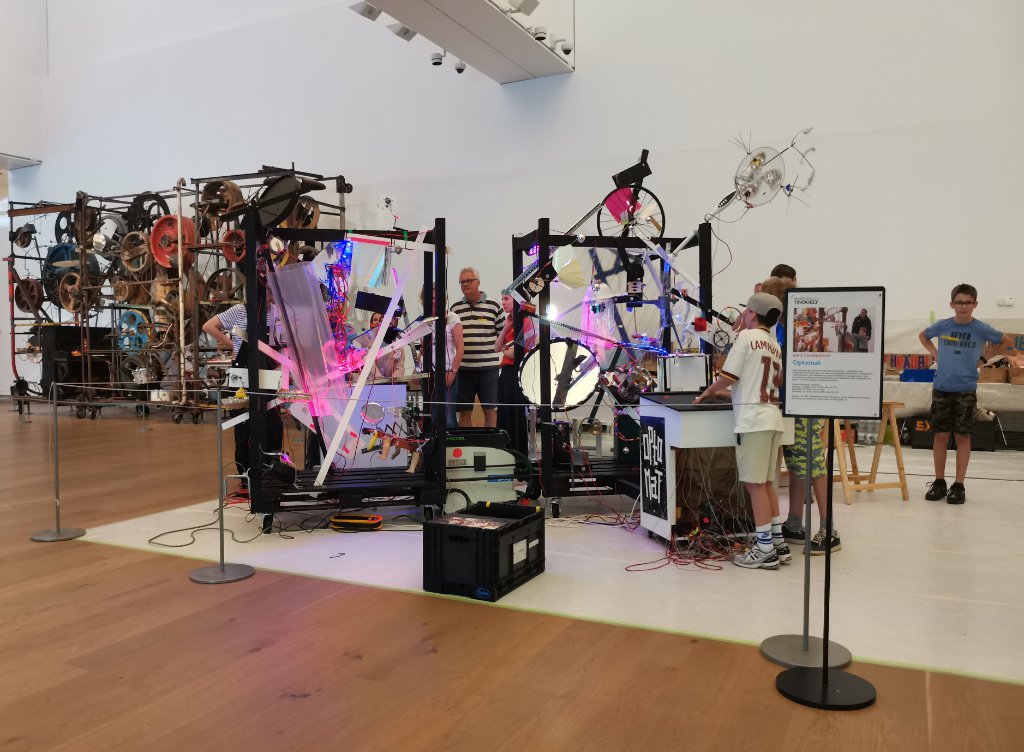
“Optomat” is a large interactive machine, full of visual wonders and optical opulence. It is made from discarded toys, simple electromechanical parts and everyday objects.
Together with about fifty museum visitors, we built the installation in a series of workshops, right among Jean Tinguely’s massive machine sculptures — and that’s where the Optomat stands now: in Museum Tinguely’s main hall, where everyone can explore and enjoy it.
Interaction
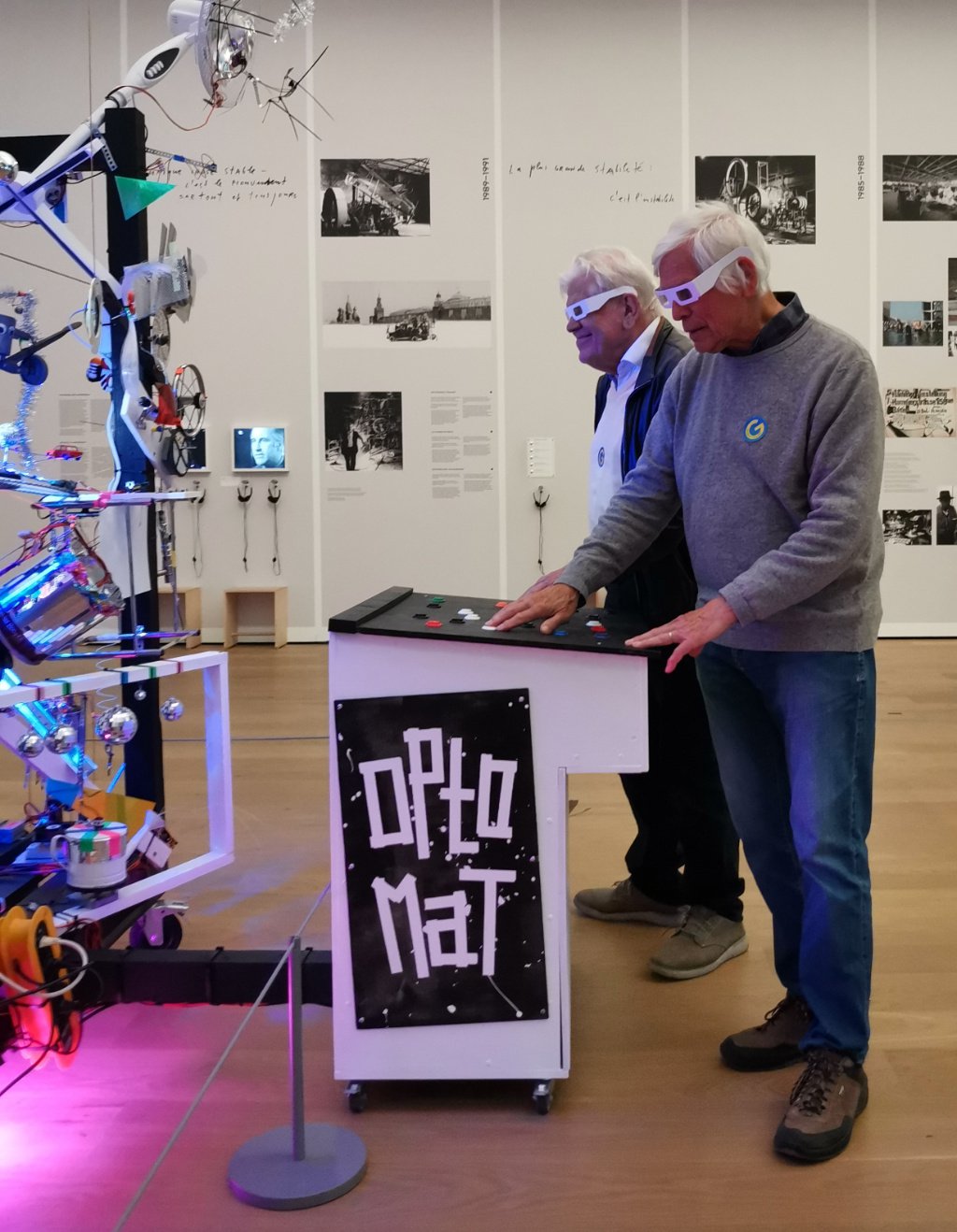
The installation consists of two large frames with many small mechanical contraptions mounted inside them. In front of them are two consoles with colorful arcade buttons. Each push of a button activates one of the small mechanisms, and somewhere something starts to spin, flicker or rattle.
Visitors can operate the machine alone or together with others. Many visitors try to push as many buttons as possible at the same time — which makes the whole installation really come alive!
Preparation
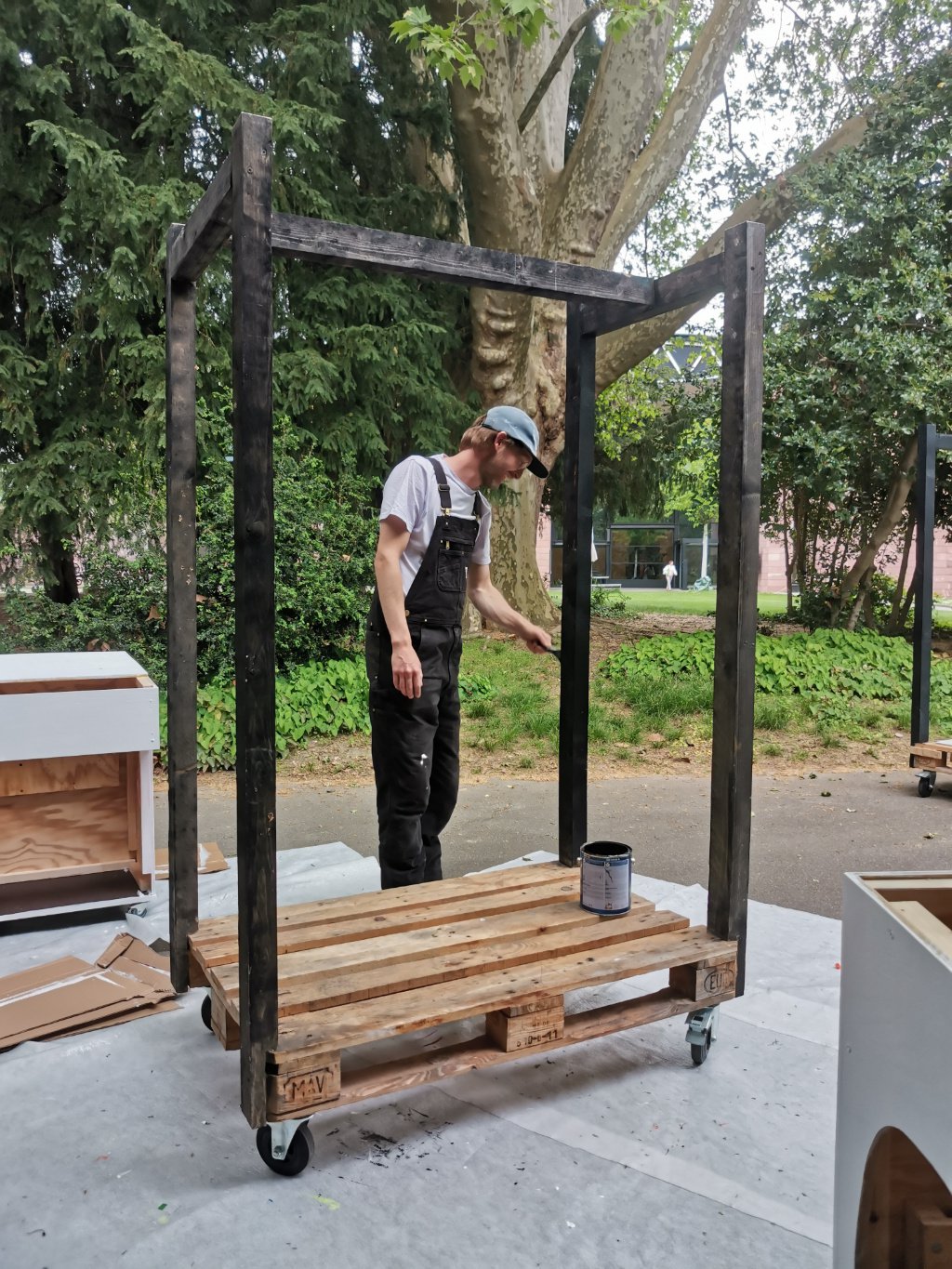
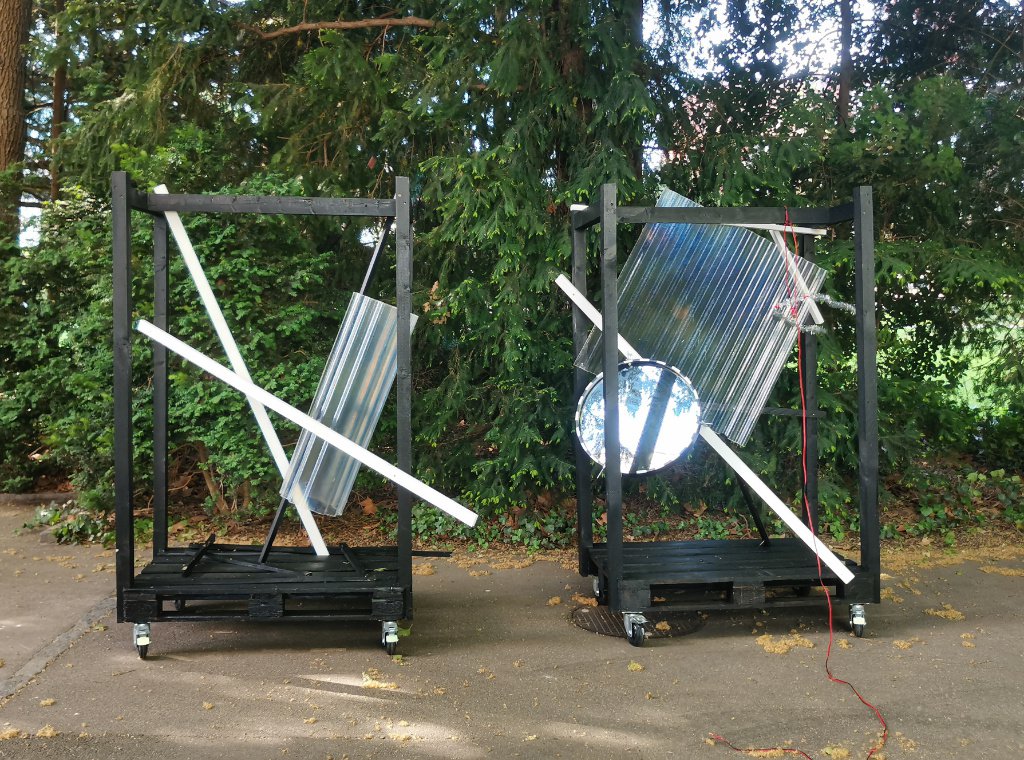
Using recycled materials from an older installation, Felix and I prepared the basic structure of the machine. Two pallets with wooden frames on top and castors underneath formed a solid base. Then we painted everything black, with a few white accents, as we found that look most suitable for an installation about optical phenomena.
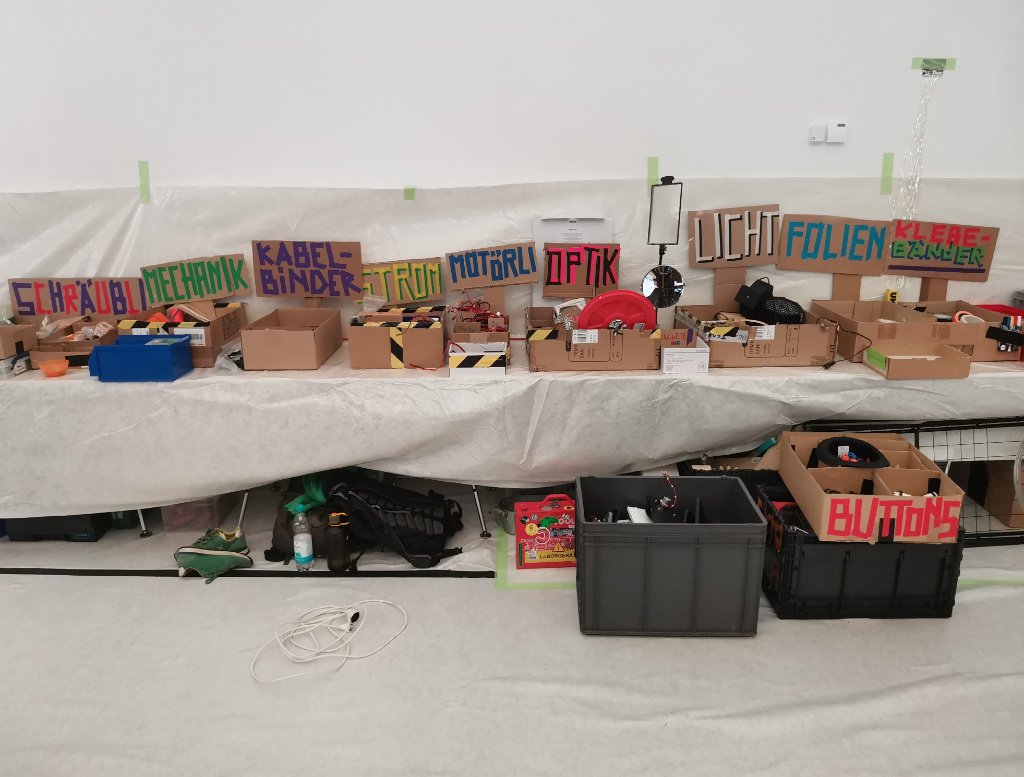
For the workshops, we also bought some materials and sorted them into clearly labeled boxes. Each workshop session lasted only about 2½ hours, so we wanted the participants to find what they needed quickly.
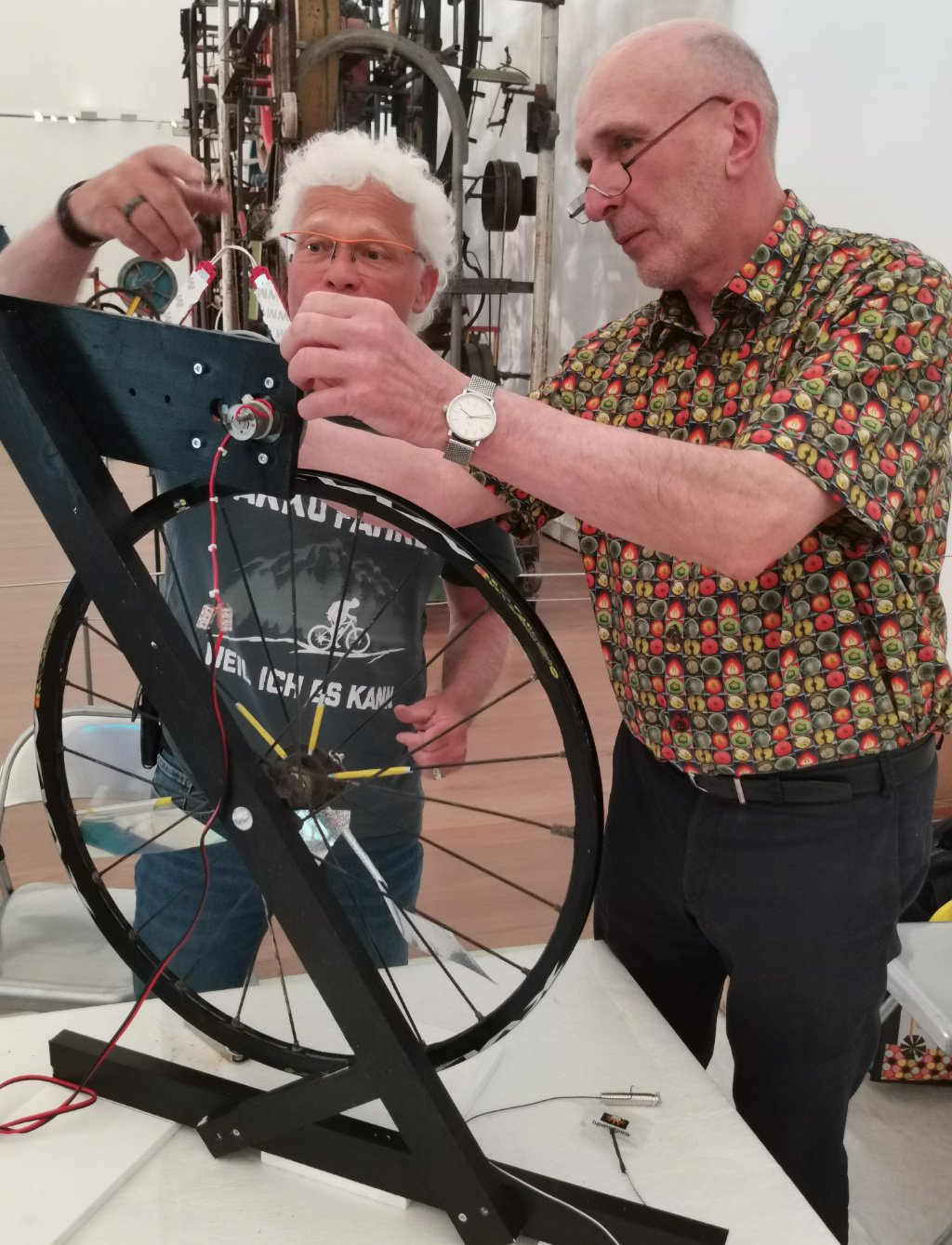
The museum's art education team helped us prepare wooden base plates, each with a DC gear motor. They made a handy starting point for a project, because it was easy to attach things to both the plate and the slowly turning motor.

Workshops
Our workshop was open to participants aged 9 to 99, making it a cross-generational project. And we really had everyone, from kids to seniors: some came with their grandchildren, others brought their parents, and still others came on their own and enjoyed working alongside a diverse group of people.
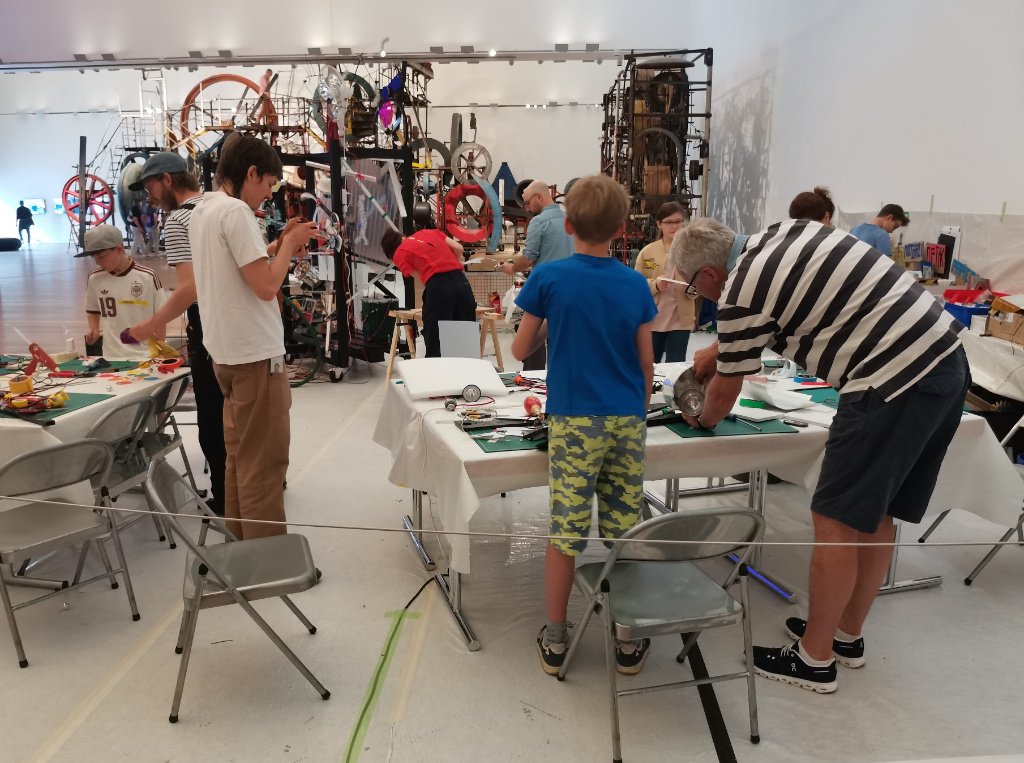

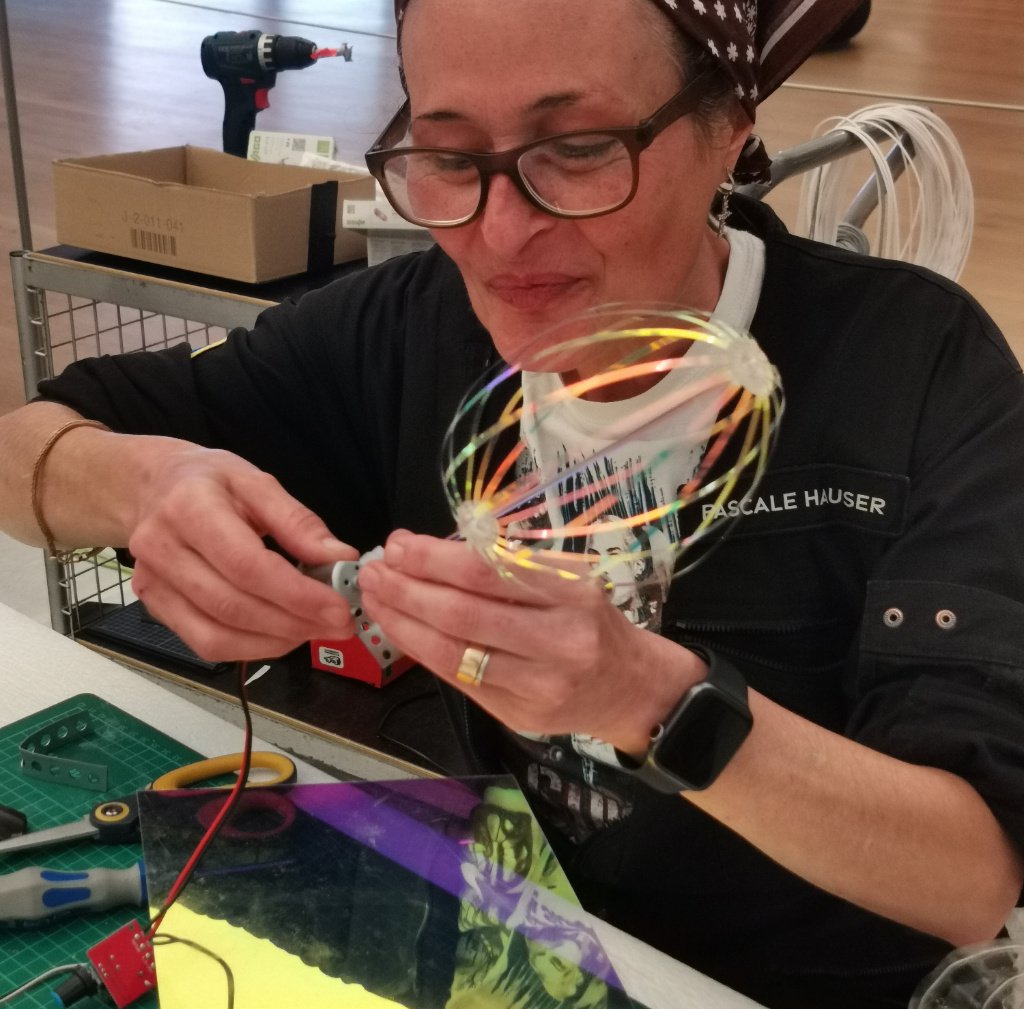
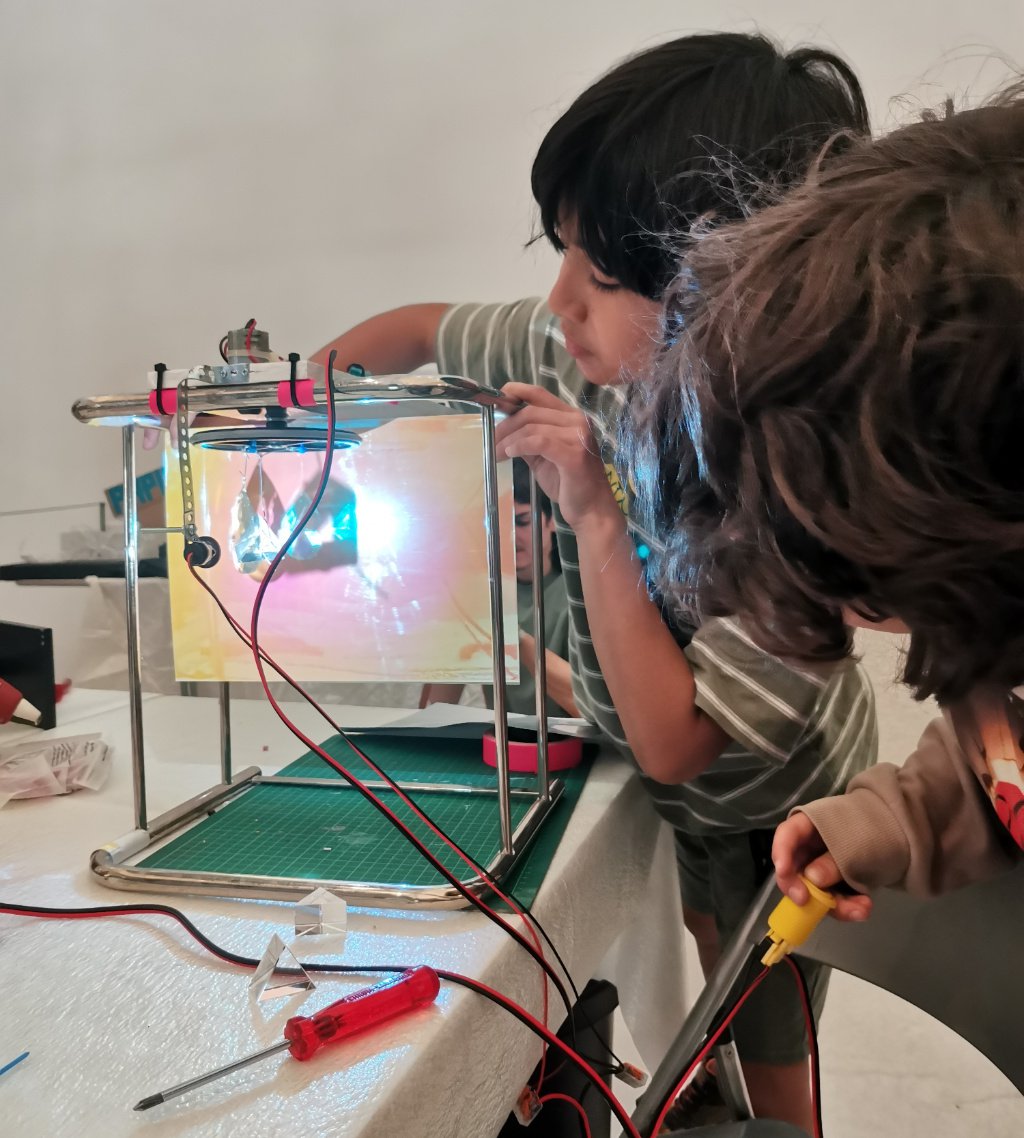
During the workshops, each participant picked a motor and an LED for building their own optical effect module. Together we mounted their modules in the big structures. The results: spinning mirrors, mesmerizing motorized moiré patterns, moving reflections and projections, and the occasional funny mechanical sound effect.
The modular design also has a practical side: if one module breaks, there’s still enough going on elsewhere.
Technical side
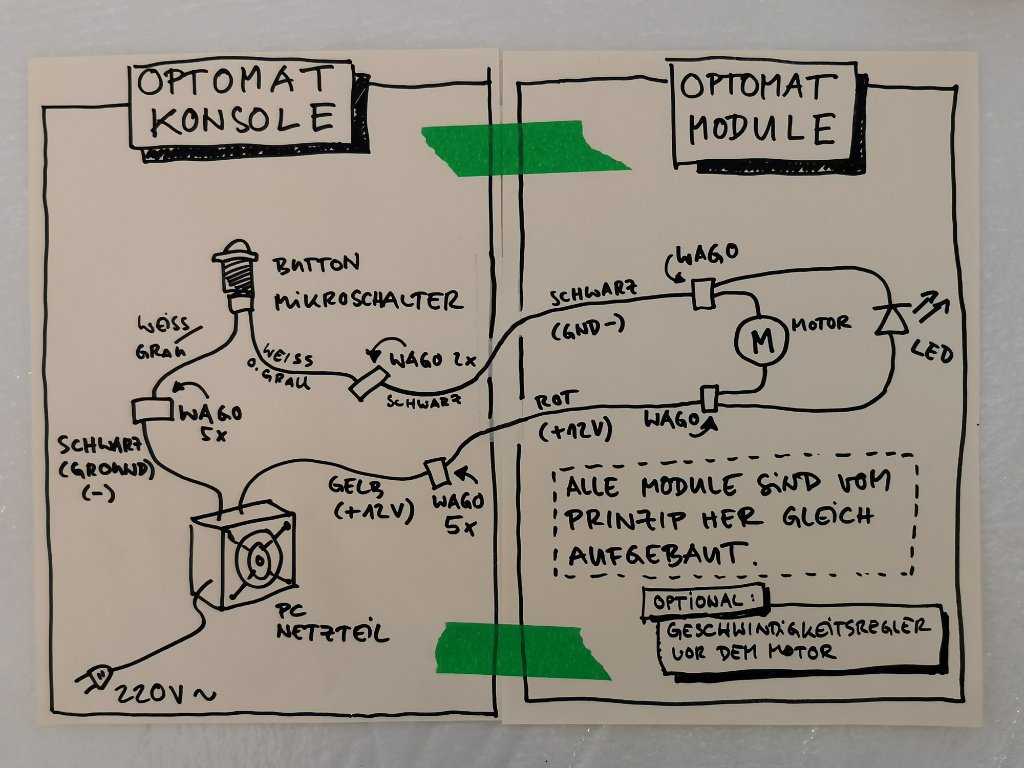
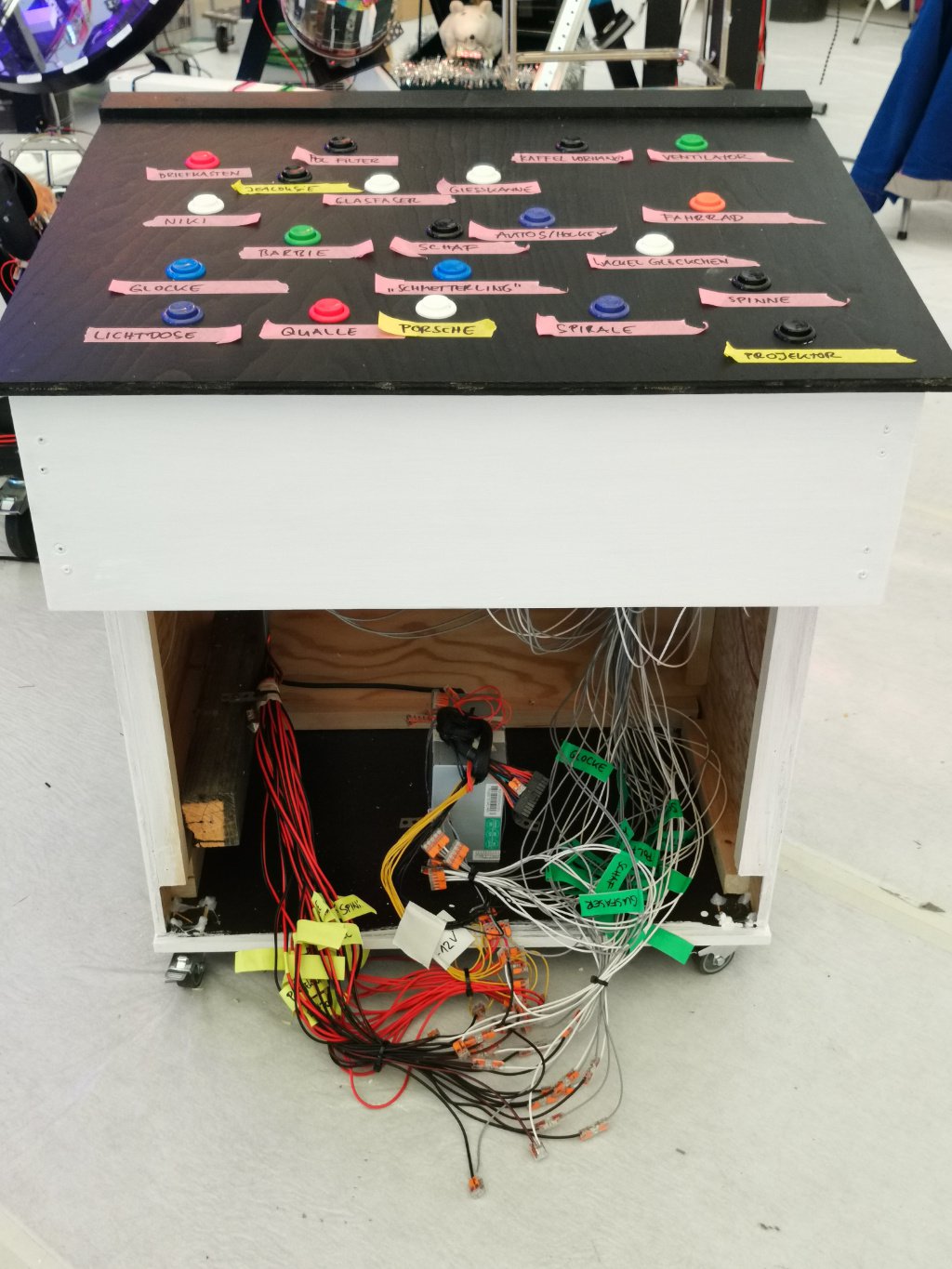
From an electrical point of view, the whole installation is quite simple: there’s a PC power supply inside each console, and every module runs on 12 V. Each button simply switches the power to its module. Even though the result looks quite overwhelming, it is relatively easy to understand and to fix, if necessary.
Thanks
A big thank you to Lilian, Sarah and Julian from the art education team of Museum Tinguely for the invitation, the wonderful time in Basel and the great collaboration!
And of course, thanks to all the workshop participants for their ideas, their materials and their energy: Francisco, Nikola, Tiziana, Ursula, Valentin, Piero, Cheuk, Elio, Nadja, Charlotte, Martin, Liv, Pascale, Malaika, Tobias, Claudia, Stefania, Ryan, Wolfgang, Louise, Mathilde, Leander, Lino, Ewan, Sean, Sandra, Samuel, Hervé, Susanne, Gerd, Evelyn, Emilio Maurice, Flavio Camille, Luca, Eduard, Mina, Irmarie, Nicolas, Doris, Sophie, Rebekka, Esther, Léon, Luc, Marc, Elke, Uli, Davinci, Melody and Nima!
Finally, big thanks to Felix! It’s always a blast working with you :)
Additional resources
- Optomat photos in my diary
- Felix’s website
- Museum Tinguely website