Carton Clock
Mechanical Clockwork
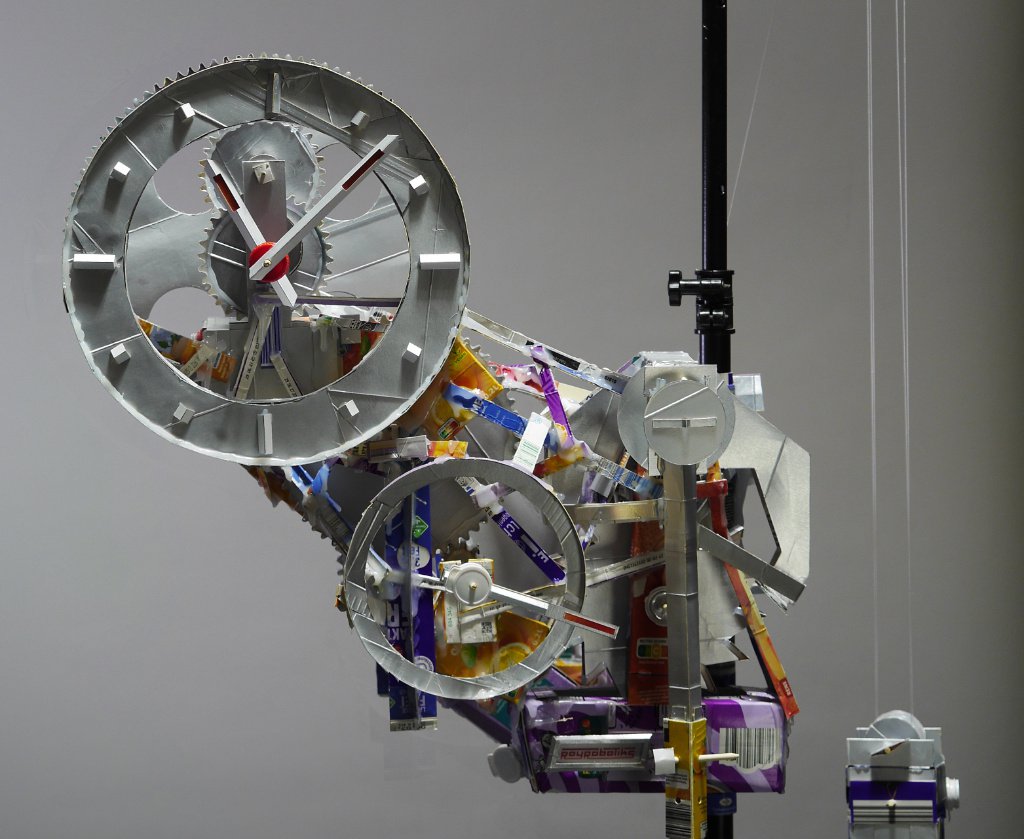
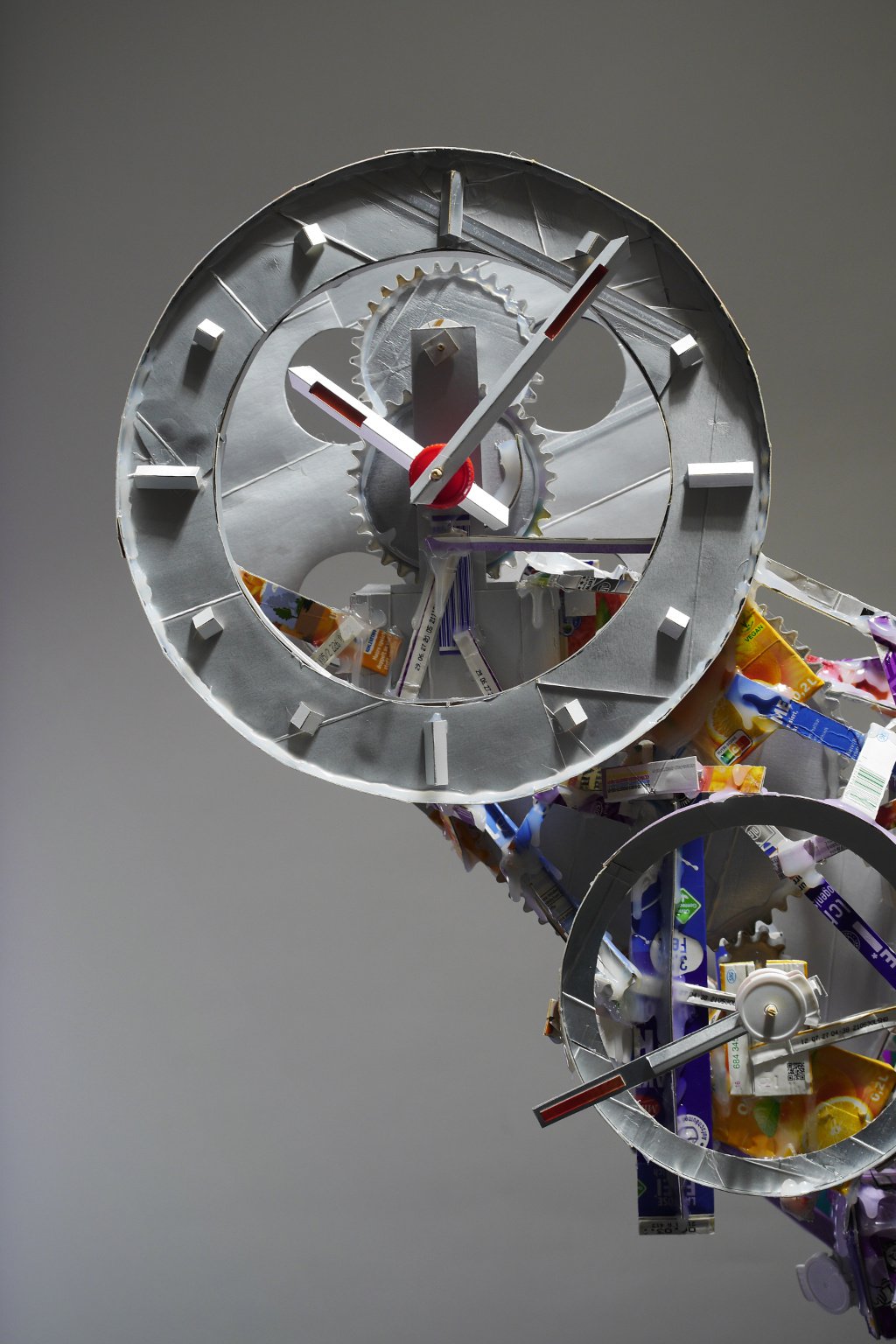
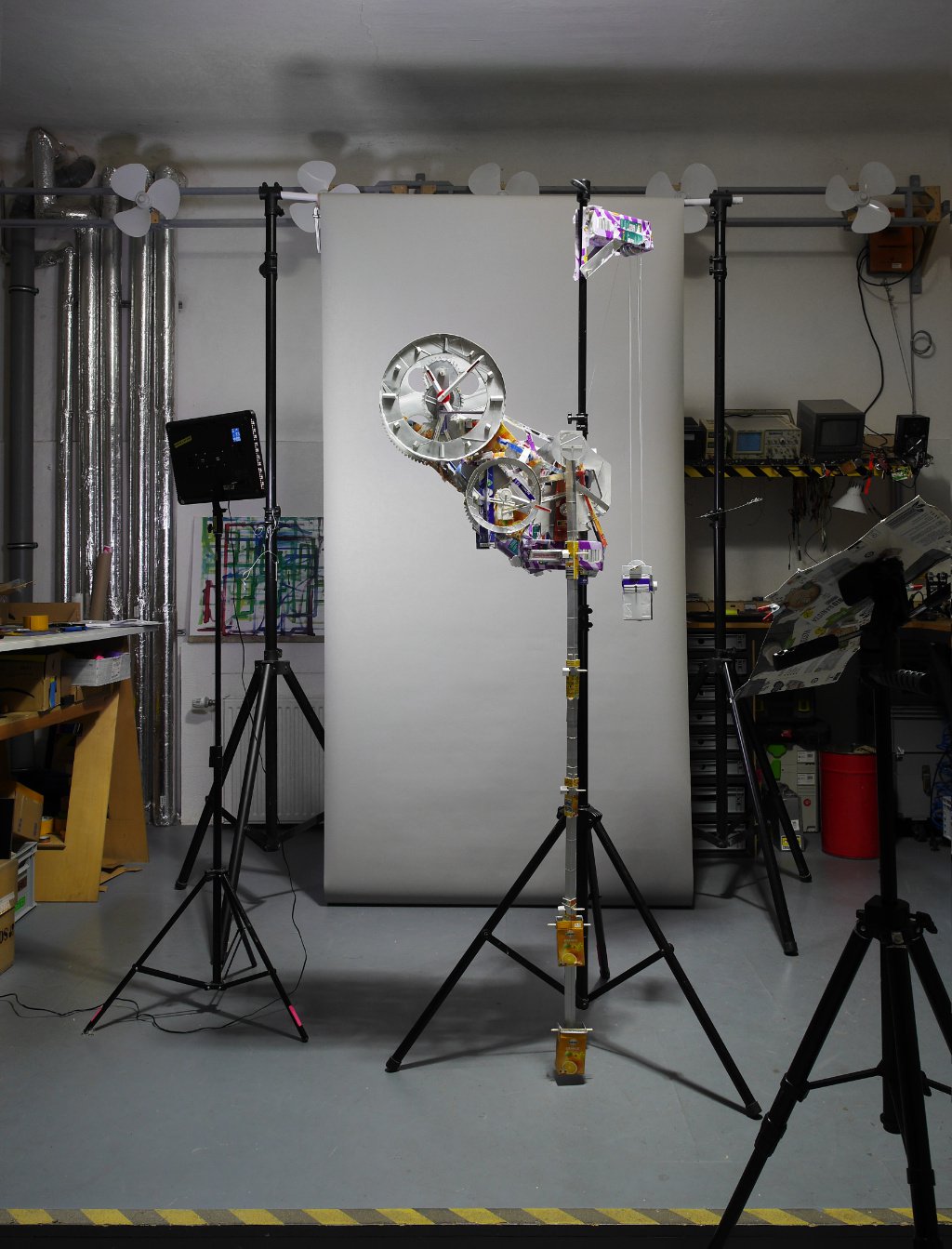
“Carton Clock” is a purist experiment in trash bin horology. The experiment culminates in the successful build of a clock, made out of empty drink cartons, plus a few BBQ skewers, paper straws, a piece of string, and some random metal nuts as weights. Everything is held together by tons of hot glue. The clockwork contains all the gear stages needed to display seconds, minutes, and hours, and when fully wound up, it runs for a little longer than an hour.
Music by HoliznaCC0
Background
Recently, I built the Glashütte Trash Clock, a functioning clockwork out of garbage. From an artistic point of view, building a clock out of trash made sense to me, because it feels like we are all experiencing the end of an era – and maybe it was a wasteful one.
From a practical point of view, I have to admit that I cheated a bit in the Glashütte project. The clock wasn’t made entirely out of trash. Besides all the tape and hot glue I brought along, I also had some pieces of PVC conduit of different diameters in my luggage, which I used as axles and bushings. Most importantly, though, I brought a pack of thick welding rods. Those were my safety net, because I knew I could bend them into almost any mechanism. If you look at the clock closely, I’m sure you’ll find some crucial parts made from welding rods here and there.
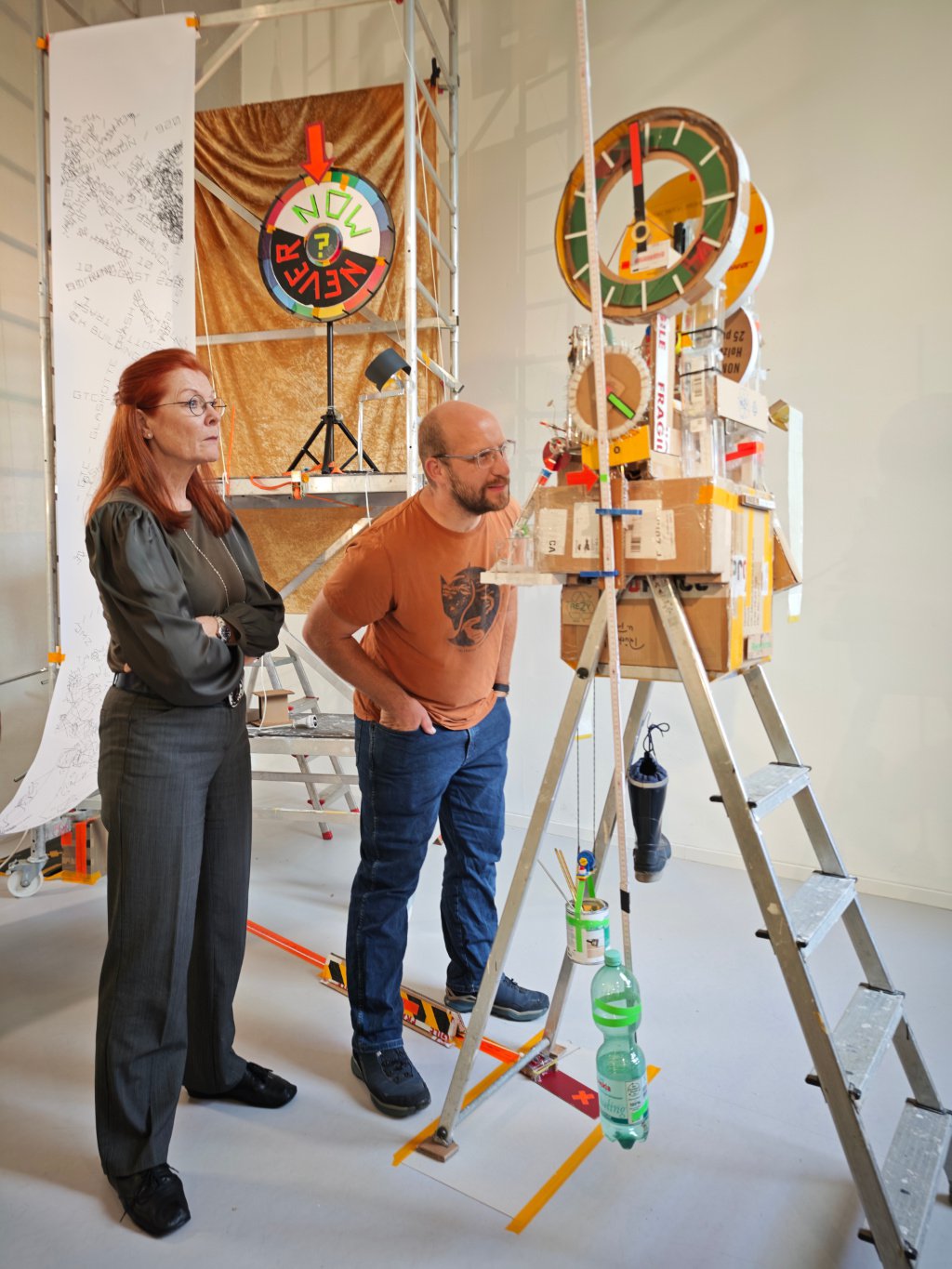
When I returned to Berlin, I wanted to build another trash clock, this time with fewer cheats, and I was curious to see how low I could go. So I looked in the trash bin, found an empty milk carton, and wondered whether that material would be good enough to build a functioning clock!?

Drink Cartons as a Material
Drink cartons are a laminate of different materials. Cardboard gives them their structural strength; most cartons also have a layer of aluminum on the inner side of the cardboard, which protects the contents from light and oxygen. Several thin films of polyethylene (PE) stick everything together and make the carton waterproof.
The aluminum layer is nice because of its shiny look. From a clockmaker’s perspective, however, the polyethylene coating is of greater practical use, because PE sliding on PE has very low friction. Unfortunately, hot glue doesn’t like to stick to PE very much – but using a lot of hot glue helps.

Most drink cartons also have a plastic cap. Some are screw-on lids, others snap on. With a small hole punched in the center, these caps make good adjustable mounts for attaching things to the skewers. Some screw caps also have ridges along their sides, so they can be used as gears right away – which I tried out in the first version of the clock.
Version 1 – Proof of Concept
First, I wanted to find out whether it was feasible at all to build a clock out of milk cartons. In Glashütte, I had learned that the most crucial mechanism in a clockwork is the escapement, an assembly consisting of the escape wheel and the anchor. It keeps the pendulum swinging, the clock ticking, and the gears turning. So that’s where I started.
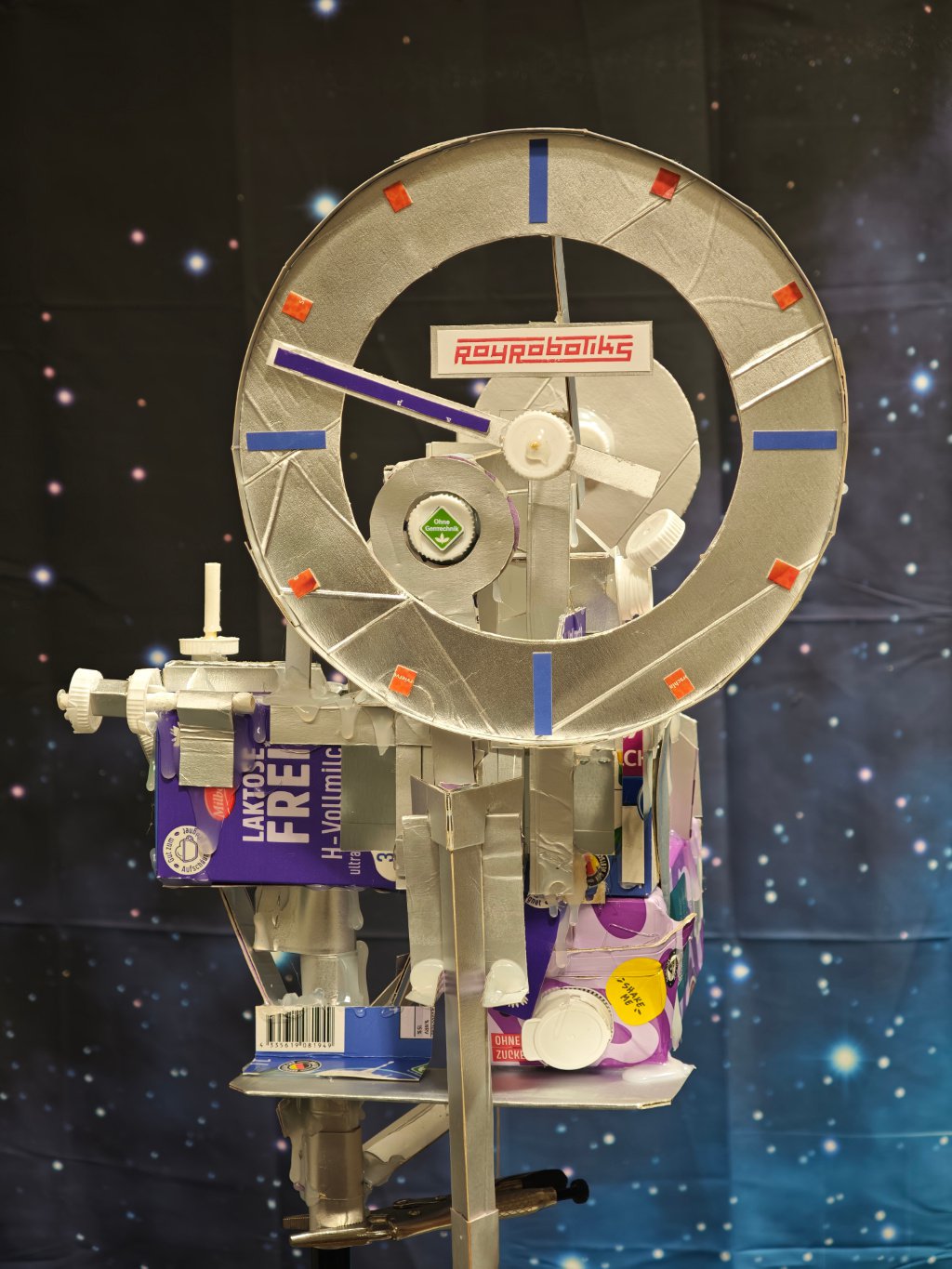
To design the shape of the escape wheel’s teeth and the anchor, I asked my coding buddy Claude to write “Cartontick”, an interactive browser tool for making carton escapements. It lets you draw the anchor and a single tooth of the escape wheel, and then simulate how the parts interact in motion. Finally, the tool generates cutting stencils as well as models for 3D‑printable gluing jigs, which help to build the designed parts out of drink carton and hot glue.
My first attempt was to make an escapement with a 30‑tooth wheel. Unfortunately, it didn’t work – at least not at this scale. With carton as material, I simply couldn’t achieve the required precision. I had to build bigger and design simpler parts. When I designed an escape wheel with only five teeth and a bigger anchor, it worked. The escapement was ticking!
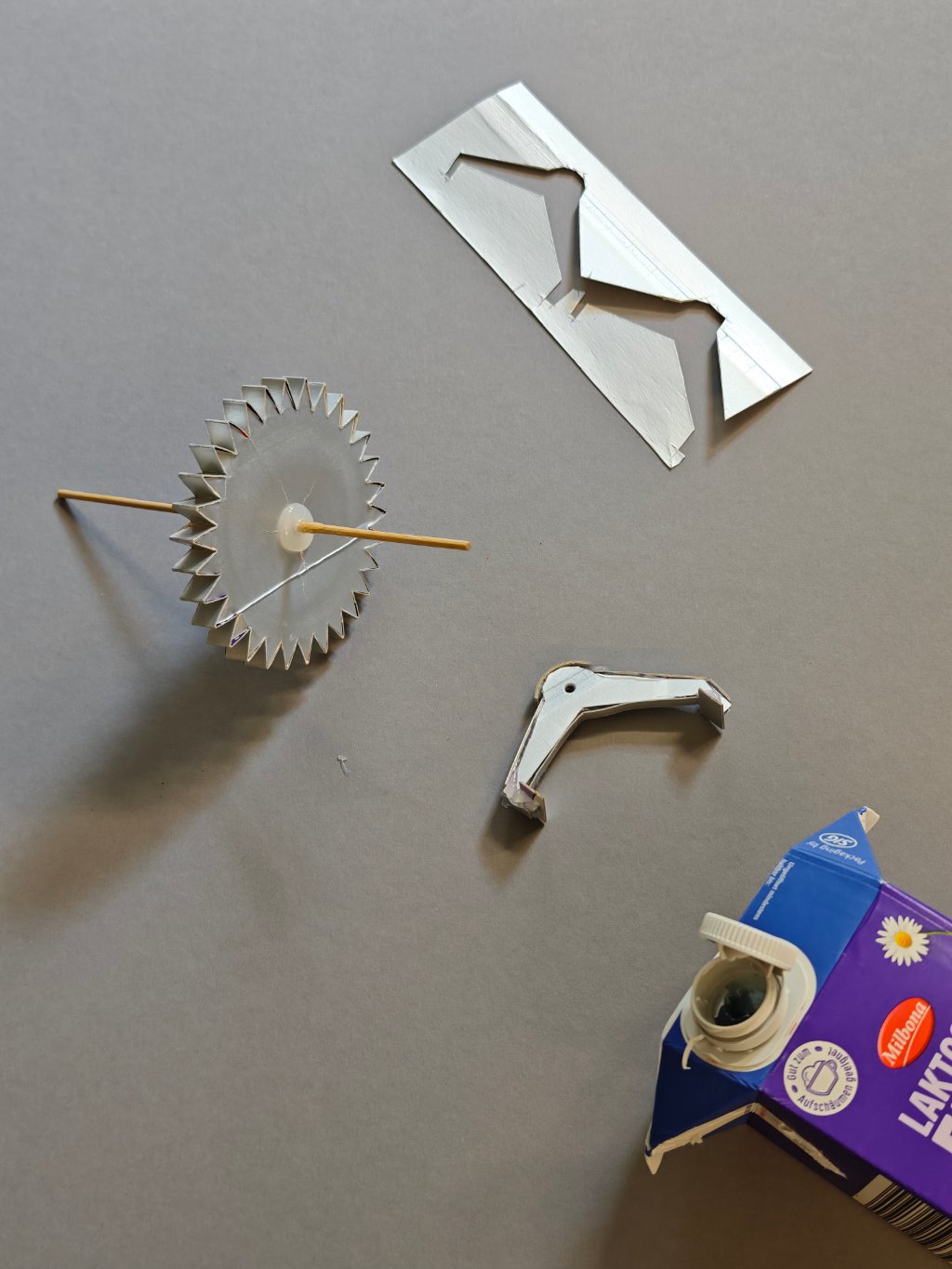
From there on, it was a smooth ride. I only had to adjust the length of the pendulum so that it would swing once per second. Since the escape wheel advances by half a tooth with every swing, it takes ten seconds for a full rotation. This meant that, in order to turn the seconds hand once per minute, I needed a 6:1 reduction. I split it into two stages, because each stage reverses the direction of rotation: the escape wheel was turning clockwise, and the seconds hand should turn clockwise as well.
For the first stage, as mentioned before, I used two ridged plastic caps of different sizes as gears: the smaller one, with 56 ridges, drives the bigger one with 90 ridges, which gives a weird reduction of about 1.6:1. For the second stage, I used a friction drive, just like in Glashütte: another plastic cap with a diameter of 27.5 mm drives a disc cut out of carton. To get the overall reduction right, that disc needed a diameter of 102.7 mm – so that’s what I aimed for when I tried to cut the carton as precisely as possible. Together, both stages make up the 6:1 reduction (90/56 × 102.7/27.5 ≈ 6.00) and the seconds hand takes 60 ticks to spin once.
It’s a clock with a seconds hand only, but this proved that it is indeed possible to build a clockwork out of milk cartons. The proof of concept only ran for 7.5 minutes, though, which I found a bit underwhelming. Therefore, I decided to build another clock, based on my newly gained experience, that would run for at least 60 minutes.
Version 2 – Full Hour Unlocked
Since the goal was to build a clock that runs for at least an hour, I wanted the new one to show the time properly – which meant building all the reduction gears to move the seconds, minute, and hour hands. And once again, apart from the string and the weights, the only materials I used were drink cartons, hot glue, paper straws, and skewers. At least for the clock itself – but more on that later.
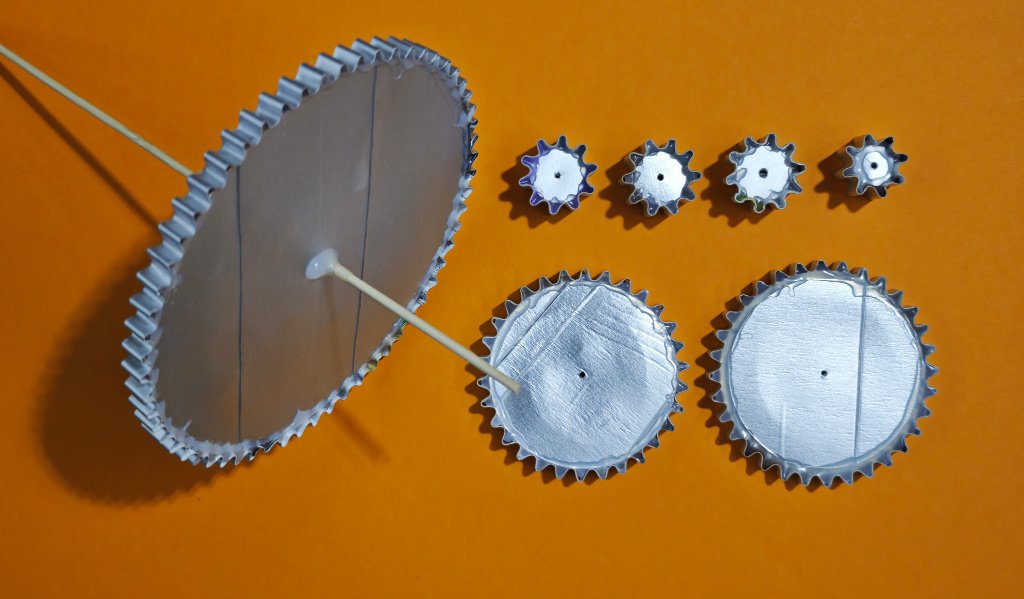
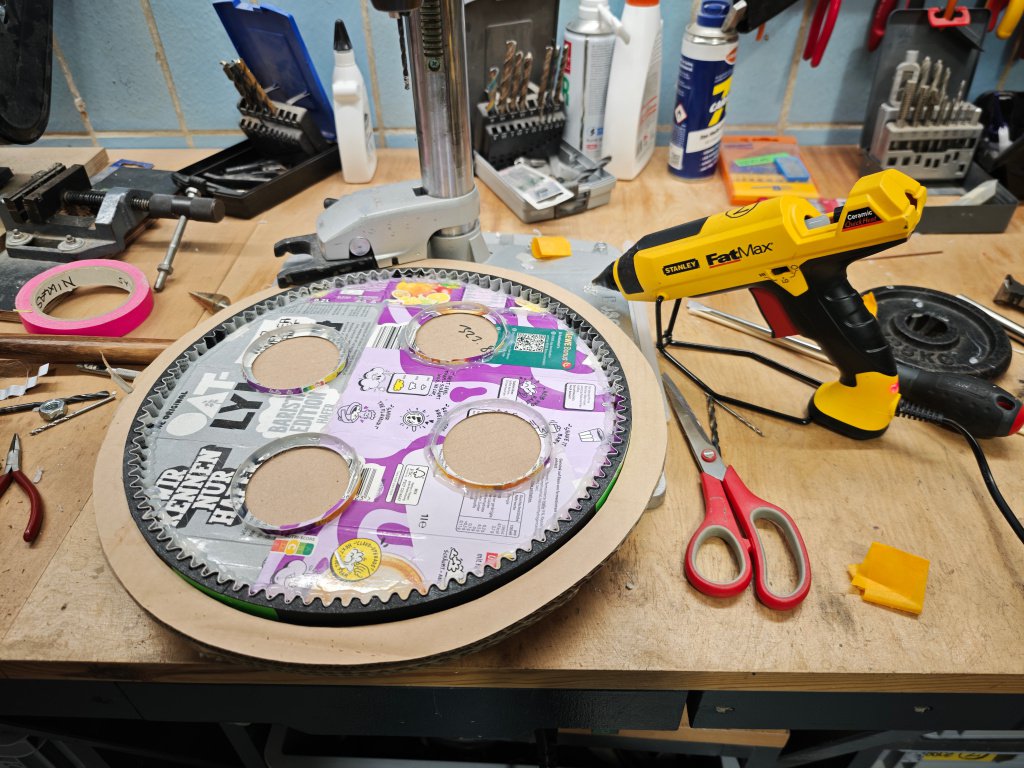
To make all the required gears, I carefully explained to Claude how “Cartongears”, another interactive browser tool, should work. Similar to Cartontick, it generates stencils and 3D-printable tools that help to build all kinds of gears out of drink carton.
Now, a careful reader might object that 3D-printed tools aren’t exactly trash. That’s true! But I decided to let that one slide, because none of them ended up in the clock. They are tools, not parts – and I’m sure there’d be a way to build those tools out of skewers and carton as well, with nothing but a compass, a ruler, and a knife.
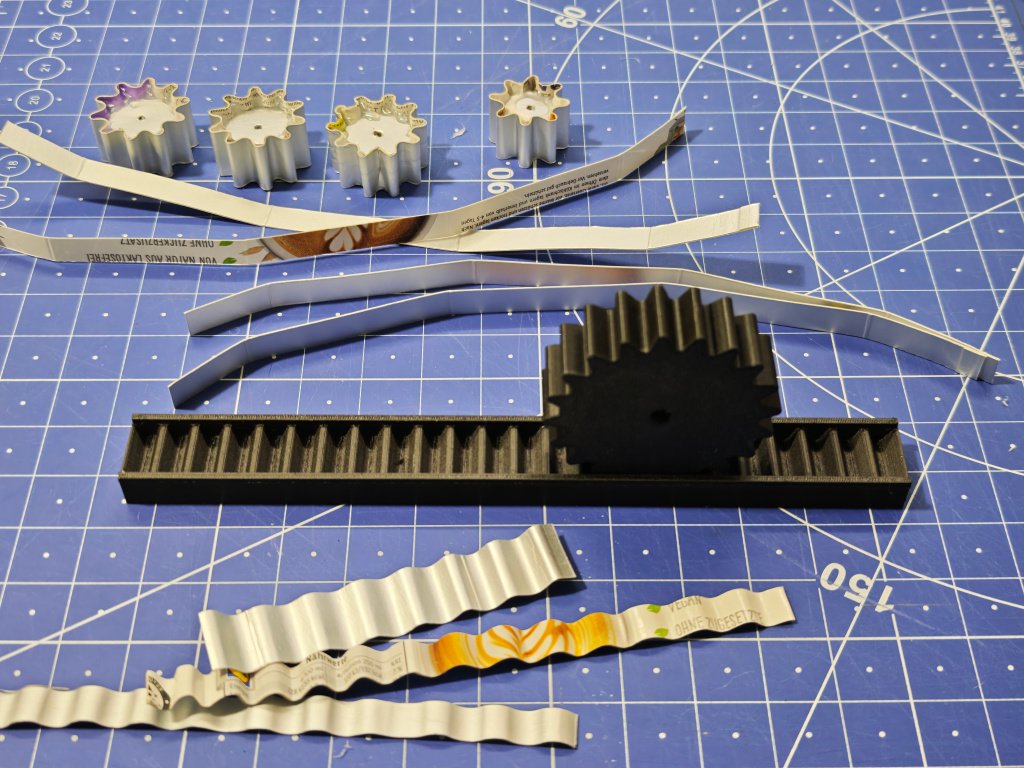
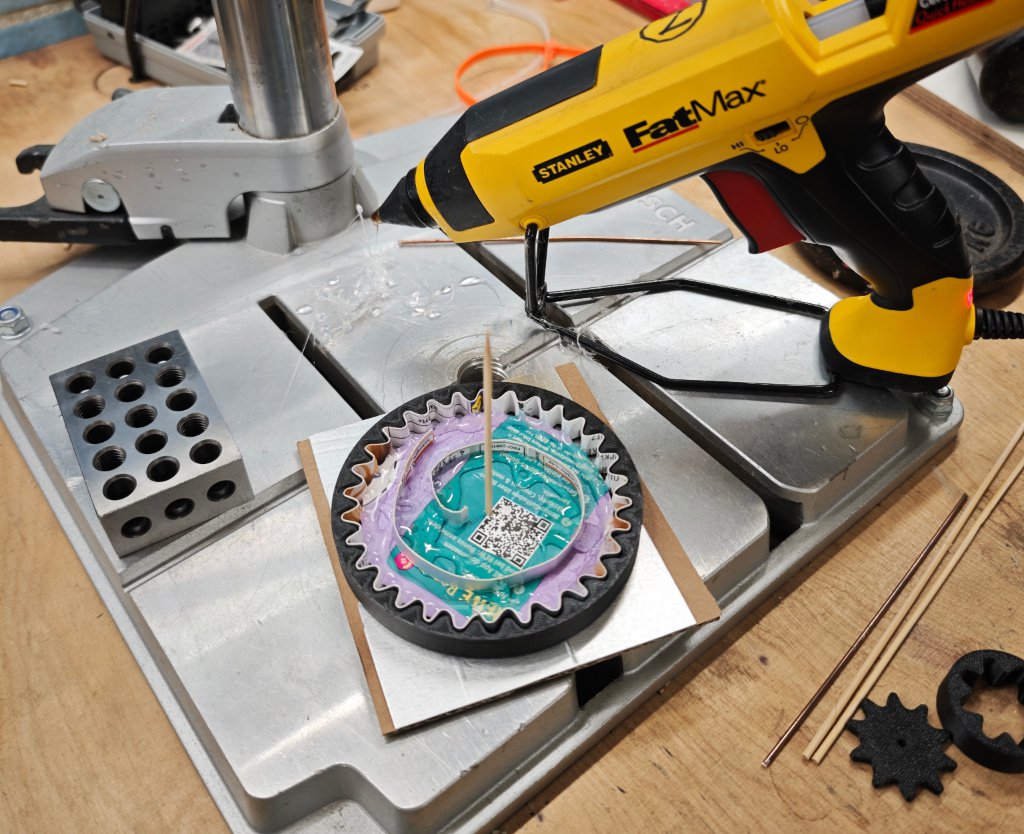
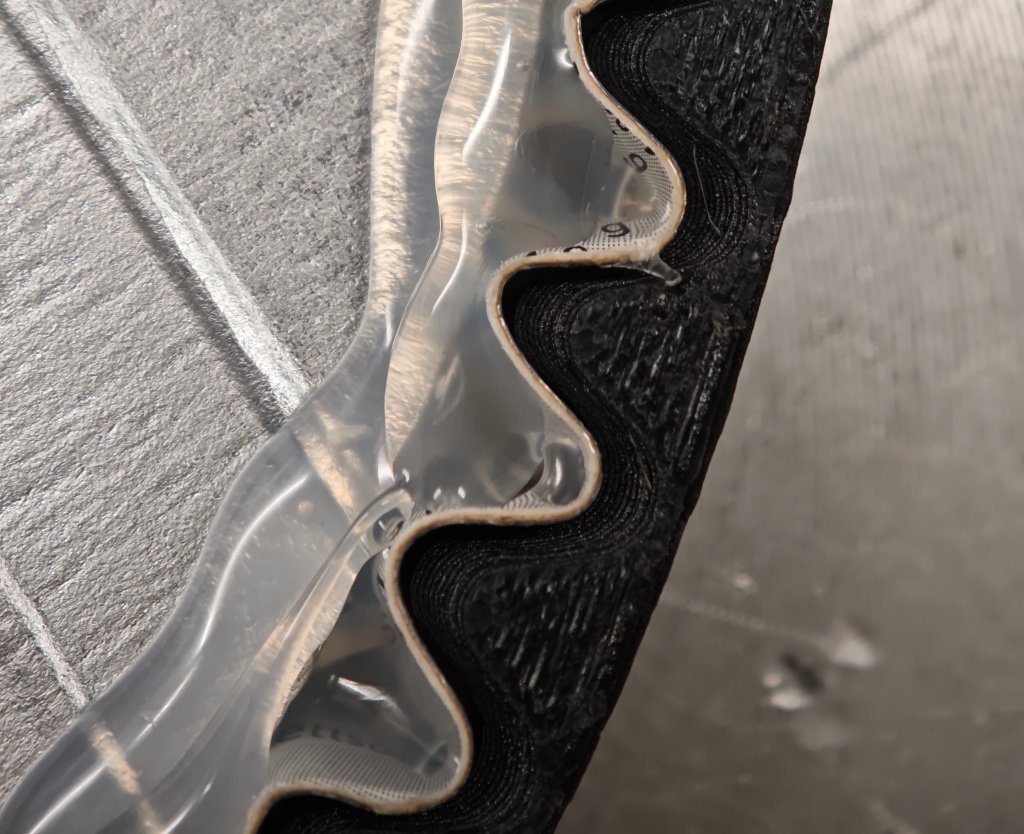
When building gears, I started with the reduction between the minute hand and the hour hand, which clockmakers call the motion work. I found this mechanism particularly interesting, because both hands share a common axis. The minute hand has to turn twelve times for the hour hand to turn once, so a 12:1 reduction is needed. Again, this is done in two stages: the first pair of gears has 10 and 30 teeth, giving a 3:1 reduction, and the second pair has 8 and 32 teeth, giving a 4:1 reduction.
The clever part is that in both stages, the number of teeth adds up to the same sum (10 + 30 = 40 and 8 + 32 = 40). Since all gears have the same tooth size, both pairs also have the same center distance. So the second stage brings the motion back to the original axis, and the hour and minute axles can be coaxial, meaning the hour hand can be mounted on a straw slipped over the minute hand’s axle.
Everything was spinning smoothly, which showed me that building carton gears with the 3D-printed tools worked quite well.
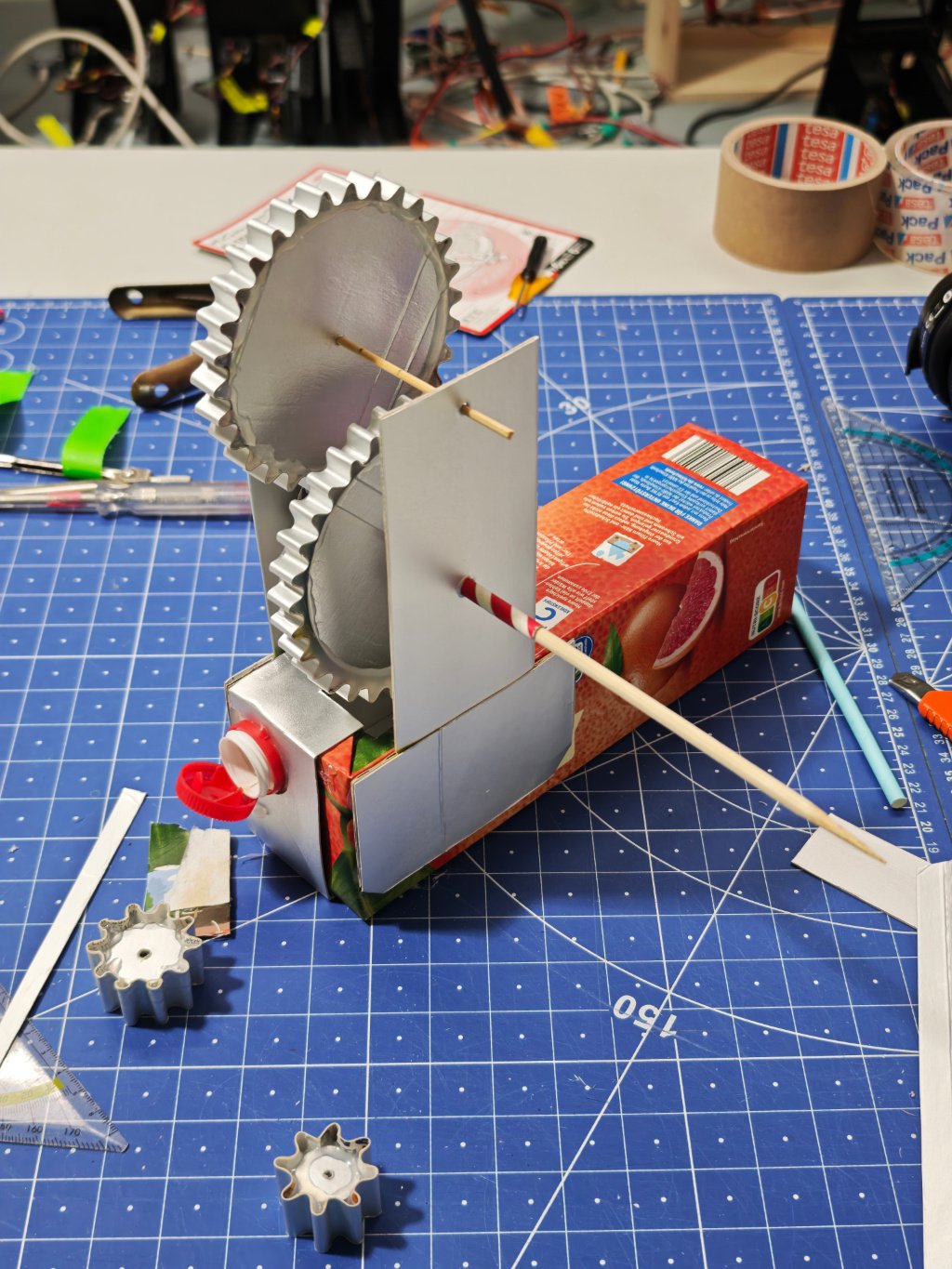
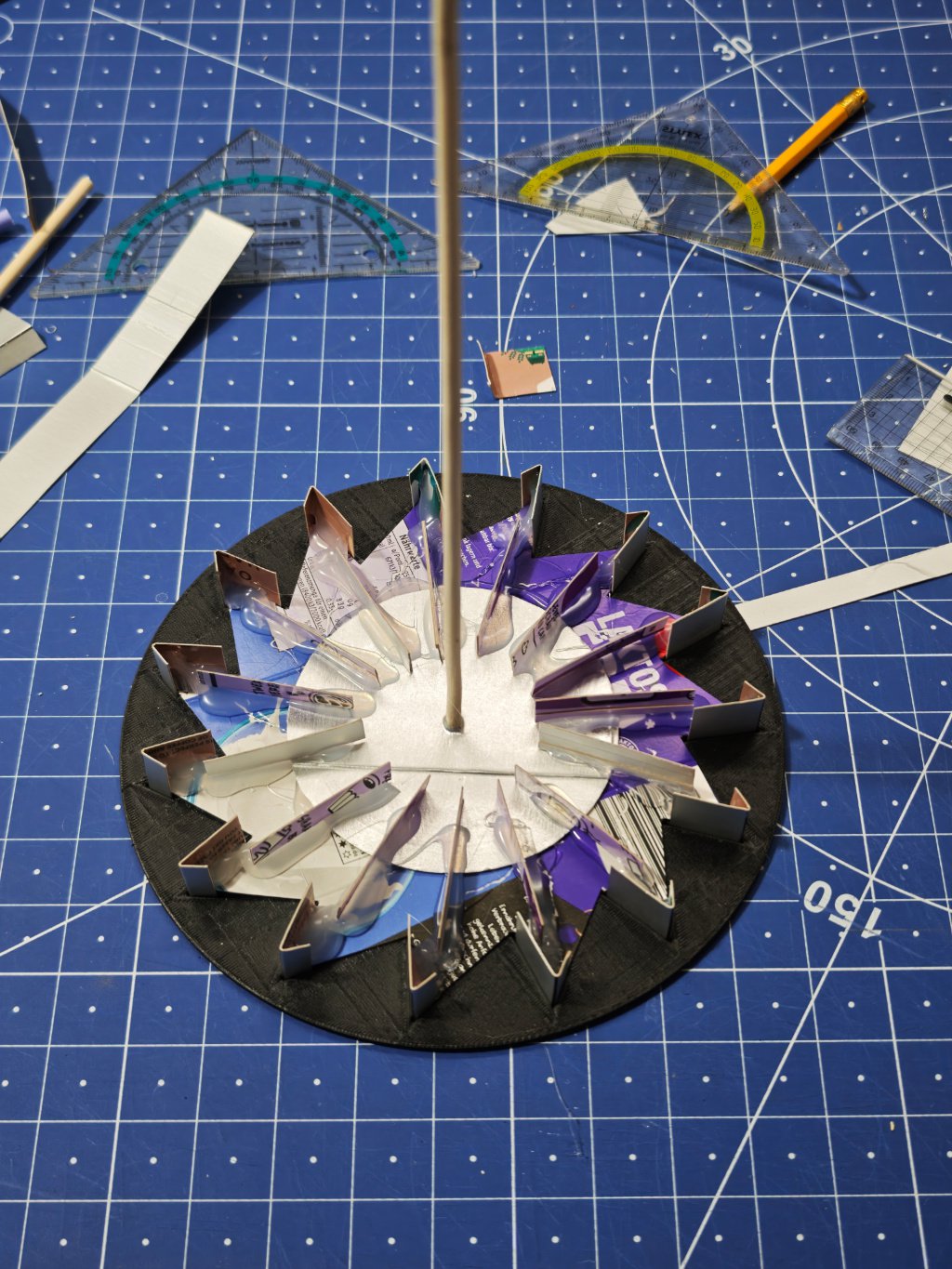
Next up was building another escapement. This time, I gave the escape wheel 15 teeth, but made it quite large. Given the tolerances I was able to achieve with the material, this seemed like a good idea. With one swing of the pendulum per second, it turns once every 30 seconds. And since I made it turn counterclockwise, a single 2:1 reduction stage was enough to drive the seconds hand at the right speed, in the right direction.
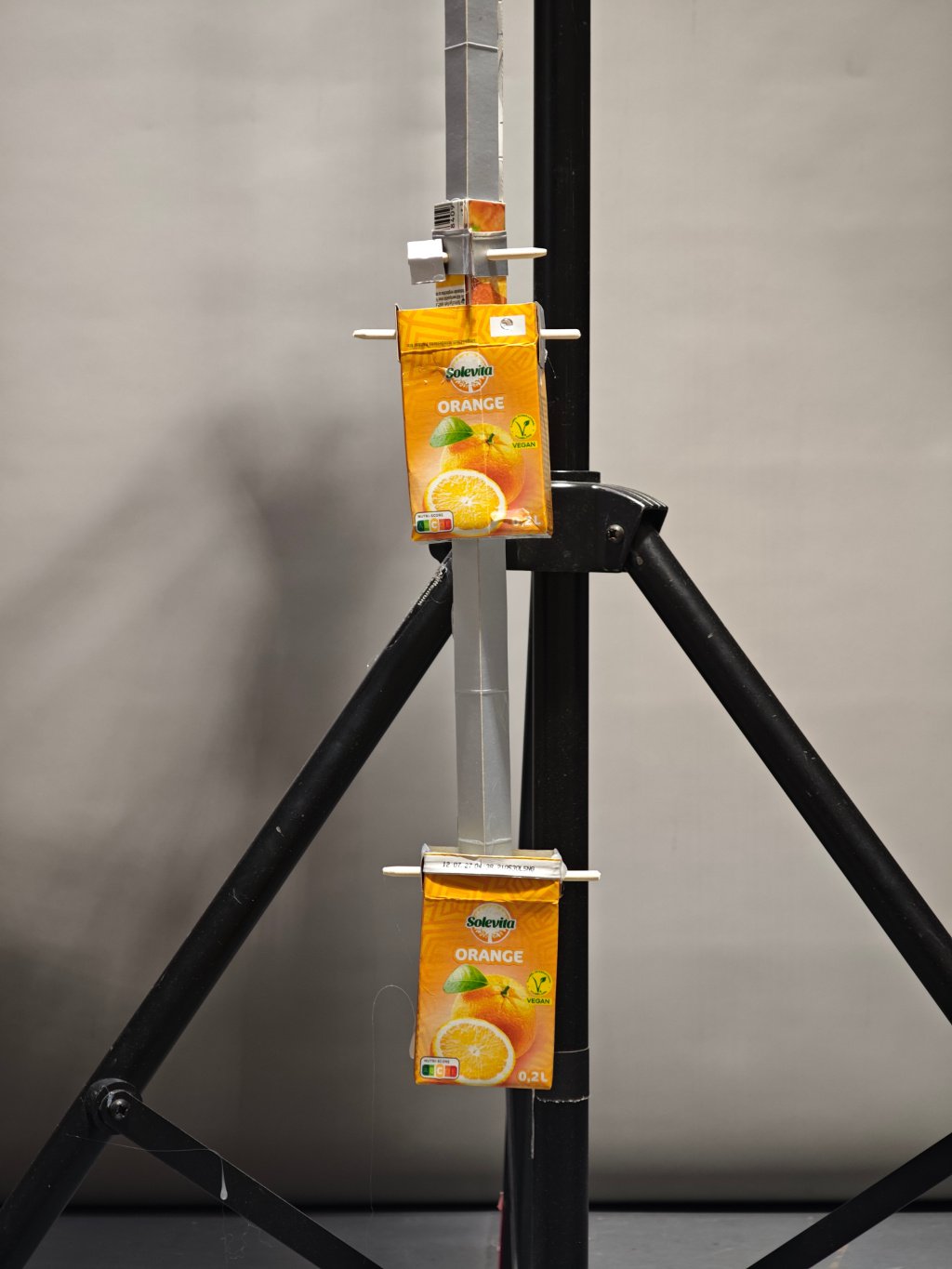
The pendulum is connected to the escapement’s anchor. To make it adjustable, I came up with a little trick: instead of a single bob, I attached two drink cartons to the rod at different heights. What determines a pendulum’s period isn’t really its total length, but effectively the distance between the pivot point and the pendulum’s center of mass. By putting metal nuts either into the upper or into the lower carton, I could shift that center of mass up or down and fine-tune the pendulum until it ticked once per second. That’s also why my pendulum ended up a bit longer than one meter.
At least, that was the theory ...
To be honest, I never quite managed to get the pendulum down to a full second. Whenever I moved more weight into the lower carton, the clock would eventually stop. So I increased the drive weight to give it more energy – until I reached the limits of what the carton parts could take. In the end, I made my peace with the fact that the Carton Clock runs a little fast – and put “long running time and high accuracy” on the wish list for my next trash clock.
The last missing piece was the connection between the seconds hand and the minute hand, which requires a 60:1 reduction. Once again, I split it into two stages: a pinion with 10 teeth drives a wheel with 60 teeth (6:1), and another 10-tooth pinion drives a wheel with 100 teeth (10:1) – the center wheel. Together, that makes 6 × 10 = 60. And since there are two stages, the direction of rotation is reversed twice, so the minute hand turns clockwise, just like the seconds hand.
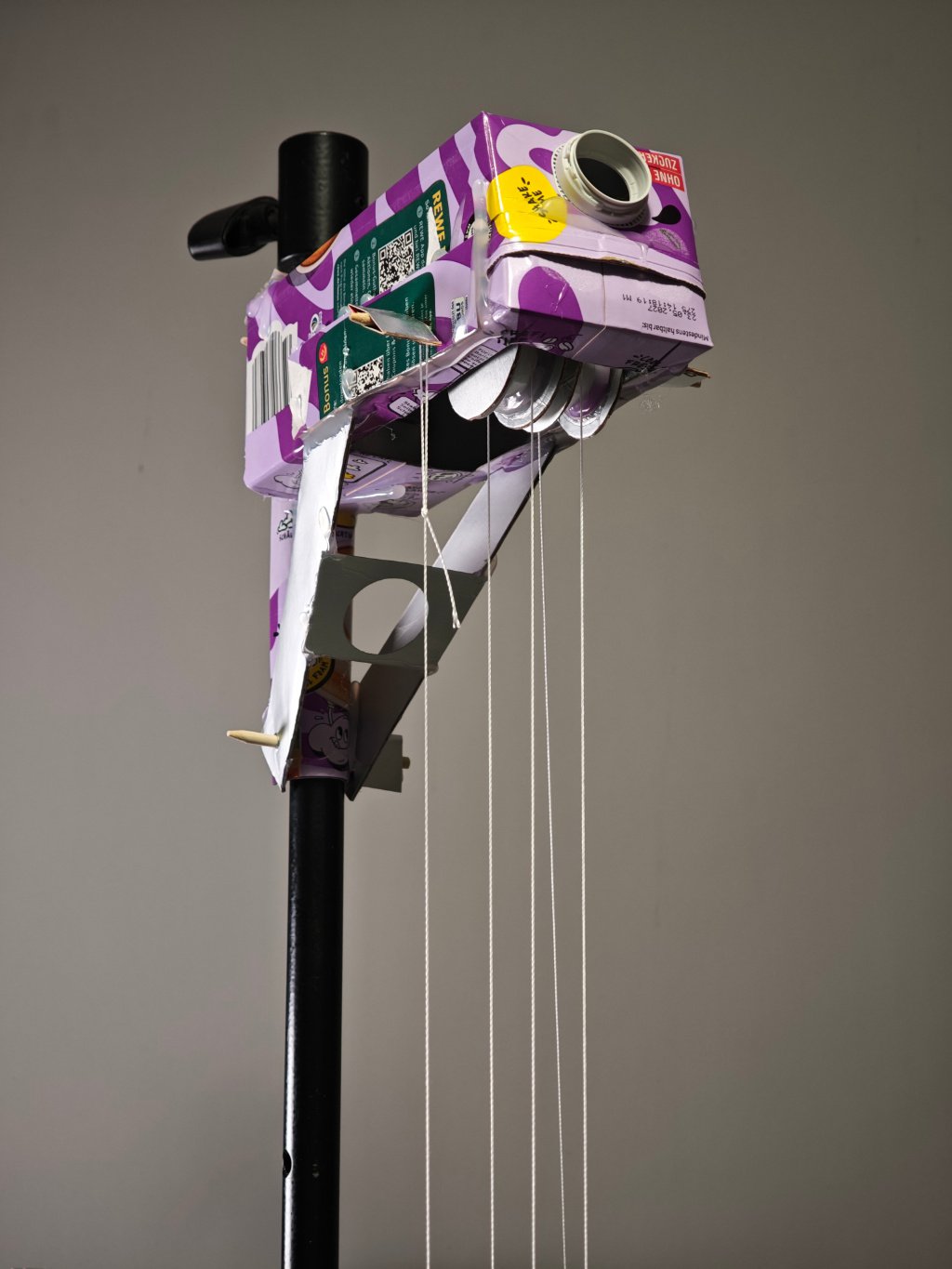
For the weight drive, I built a block and tackle with four pulleys and mounted everything on a tall tripod. And yes, that tripod isn’t made of drink cartons either. But I let this one slide as well: it doesn’t do anything except hold the clockwork up. The clock would run just as well when screwed onto a wall, hung in a door frame, or zip-tied onto a tree – I simply had a tripod at hand.
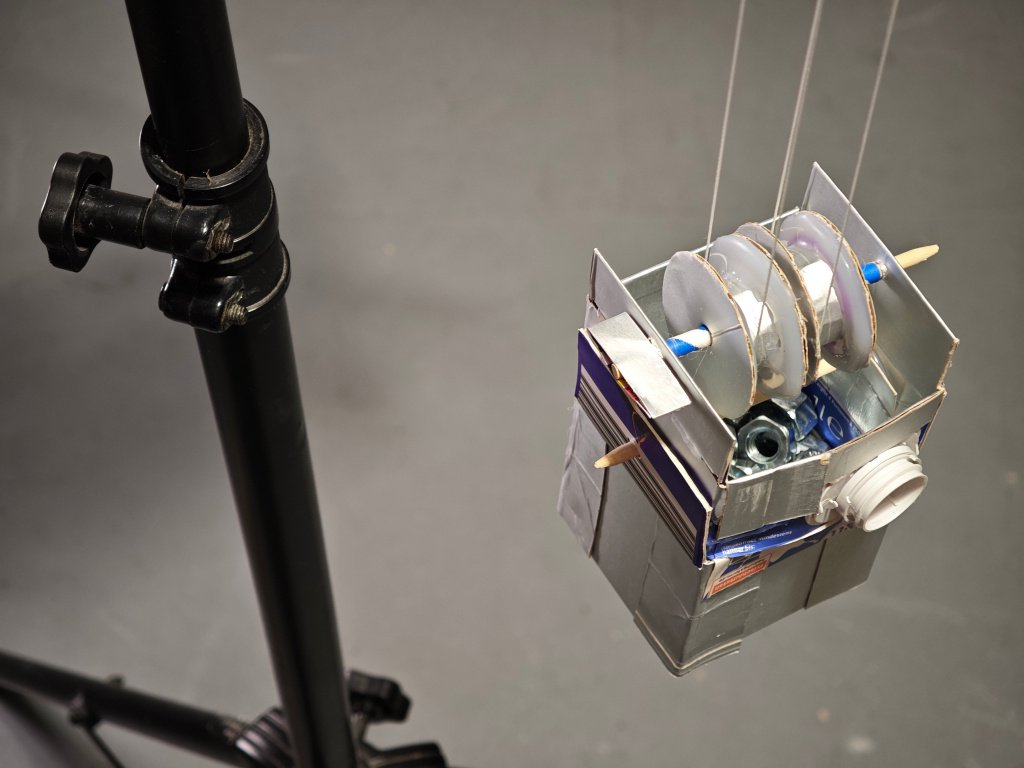
The weight can be lifted about 2.50 m above the ground, and the block and tackle extends this to 10 m of string that can be wound up. After a few adjustments to the size of the barrel the string is wound on, the clock kept going for a little more than an hour.
Goal achieved! Now I’m thinking about the next clock I’d like to build – and I already have some garbage in mind. It’s not yet time to talk about it, but I can promise one thing: it won’t be made out of banana peels.


Thanks
I’d like to thank all the clockmakers in history – including my own great-great-grandfather and great-grandfather. Almost every mechanism in my clocks was invented centuries ago: the pendulum, the anchor escapement, the motion work with its two hands on one axis. I enjoy rediscovering these ideas – not just by reading about them, but by cutting, gluing, and failing until they finally work. So if my trash clocks tick at all, it’s because I was standing on the shoulders of giants – even if I was knee-deep in a pile of drink cartons.
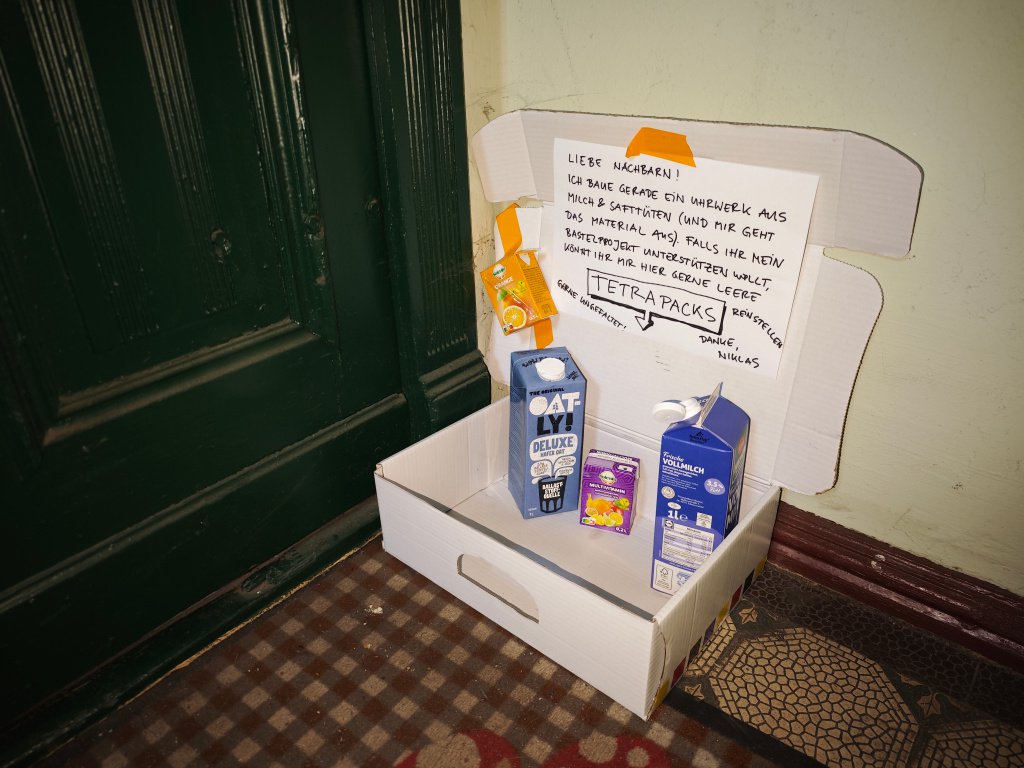
And of course, big thanks to all my neighbors who helped me collect empty drink cartons. It turns out quite a lot of them are needed to build a clock!
Additional Resources
- More Carton Clock pics and clips in my diary
- Cartontick – Browser tool for designing escapements and glue jigs
- Cartongears – Browser tool for designing gears, tools, and glue jigs